


[Article]: How Certified Test Weights Support Industrial Load Testing
There is a lot that goes into maintaining safety and reliability within industrial environments. While many people associate test weights with calibration and measurement procedures, they also play an important role in crane inspections, load testing and equipment verification. For businesses that rely on cranes and lifting equipment every day, making sure those systems can safely handle heavy loads is a key part of ongoing operations.
Regular testing helps operators confirm that equipment continues to perform as expected. Whether the objective is a routine inspection, a proof-load test or a larger overload trial, the quality of the testing system matters. This is why so much attention is given to picking suitable weight systems that can support accurate and consistent testing procedures.
Choosing the Right Certified Weights for the Job
Before any crane inspection or load test takes place, technicians first need to decide which weight system is most appropriate for the equipment being assessed.
This is where certified test weights for industrial scales and industrial load-testing applications become relevant. In many industrial settings, the goal is not only to verify weighing systems but also to confirm that cranes and hoists can safely operate under specific load conditions. Reliable test weights help create controlled testing environments that allow operators to evaluate performance with confidence.
Many organisations prefer working with manufacturers that specialise in engineered weight systems and industrial testing solutions. These companies often have extensive experience developing products designed specifically for demanding industrial applications. Their systems are built to support inspections, commissioning procedures and operational testing across a wide range of sectors.
The process generally starts with the equipment itself. A small lifting device requires a different testing approach than a large overhead crane operating in a factory, port or construction environment. Understanding the intended load capacity and testing requirements helps determine which weight system should be used.
Why Load Capacity and Flexibility Are So Important
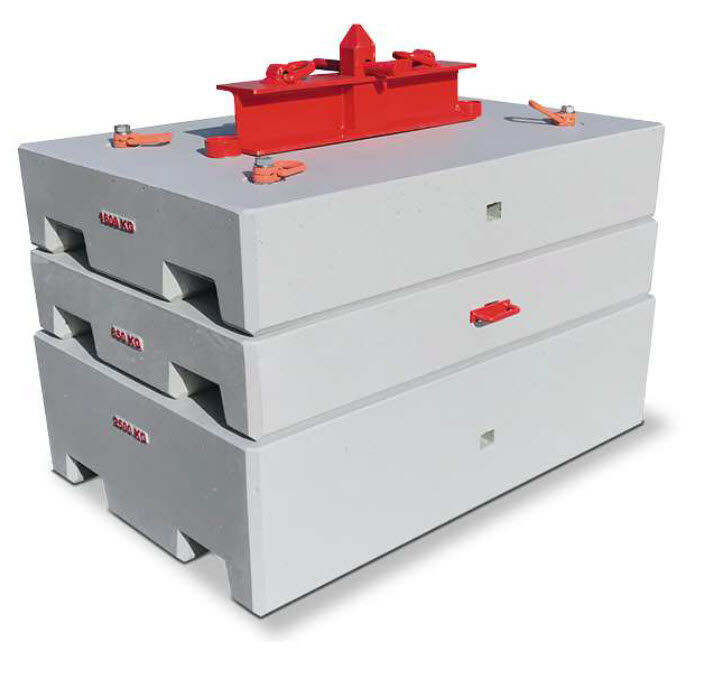
As you can imagine, every crane operates differently, which means testing requirements can vary considerably from one site to another. Because of this, many operators rely on modular weight systems that can be adapted to suit different projects. Rather than using fixed solutions, stackable load test systems allow technicians to build specific load configurations depending on the equipment being inspected.
When planning a crane inspection or load trial, technicians will usually consider factors such as:
- Maximum lifting capacity
- Required proof-load levels
- Inspection objectives
- Available testing space
- Equipment configuration
Looking at these factors beforehand helps ensure that the chosen testing system matches the requirements of the job.
Heavy-Concrete Weight Systems Support Industrial Testing
Large industrial testing projects often require substantial loads, which is why heavy-concrete weight systems have become widely used throughout the industry.
These systems are designed to provide the weight needed for crane inspections and load trials while remaining practical to handle and transport. Their modular structure allows different weight combinations to be assembled depending on the testing requirements.
Unlike laboratory calibration weights, heavy-concrete test systems are intended specifically for industrial load testing. Their role is to support activities such as proof-load testing, overload checks, commissioning procedures and routine inspections.
Reliable Testing Supports Equipment Safety
One of the primary reasons for conducting load testing is to help confirm that lifting equipment remains safe and operational.
Cranes are often responsible for moving valuable materials and heavy loads throughout industrial facilities. Because of this, regular inspections play an important role in ongoing maintenance programmes.
Many organisations carry out proof-load testing and functional checks to verify that equipment continues to perform according to expectations. In some sectors, inspections may also be linked to recognised safety frameworks and industry requirements.
Reliable test weights help make these inspections possible. Without a suitable load source, it becomes much more difficult to evaluate how lifting systems respond under realistic operating conditions.
Testing allows operators to gather useful information about equipment performance while helping to support safe day-to-day operations.
Operational Readiness Depends on Regular Verification
Selecting the correct weight system is only one part of the process. Maintaining a consistent testing schedule is equally important.
Industrial equipment experiences wear through regular use, which is why periodic inspections remain an important part of long-term maintenance strategies. Routine testing allows operators to identify potential concerns and verify that equipment continues operating within expected parameters.
Many facilities incorporate load testing into broader maintenance programmes. This may include inspections following installation, checks after significant repairs, scheduled proof-load tests and ongoing operational assessments.
The Importance of Quality Test Weight Systems
By selecting suitable testing systems and following established inspection procedures, operators can gain a clearer understanding of how their equipment performs. Modular heavy-concrete weight systems, stackable testing solutions and engineered load-testing products all contribute to safer and more effective operations.
In the end, reliable testing supports reliable equipment. When cranes and hoists are assessed using appropriate weight systems and structured procedures, operators can approach daily operations with more understanding.








Interested? Submit your enquiry using the form below:
Only available for registered users. Sign In to your account or register here.